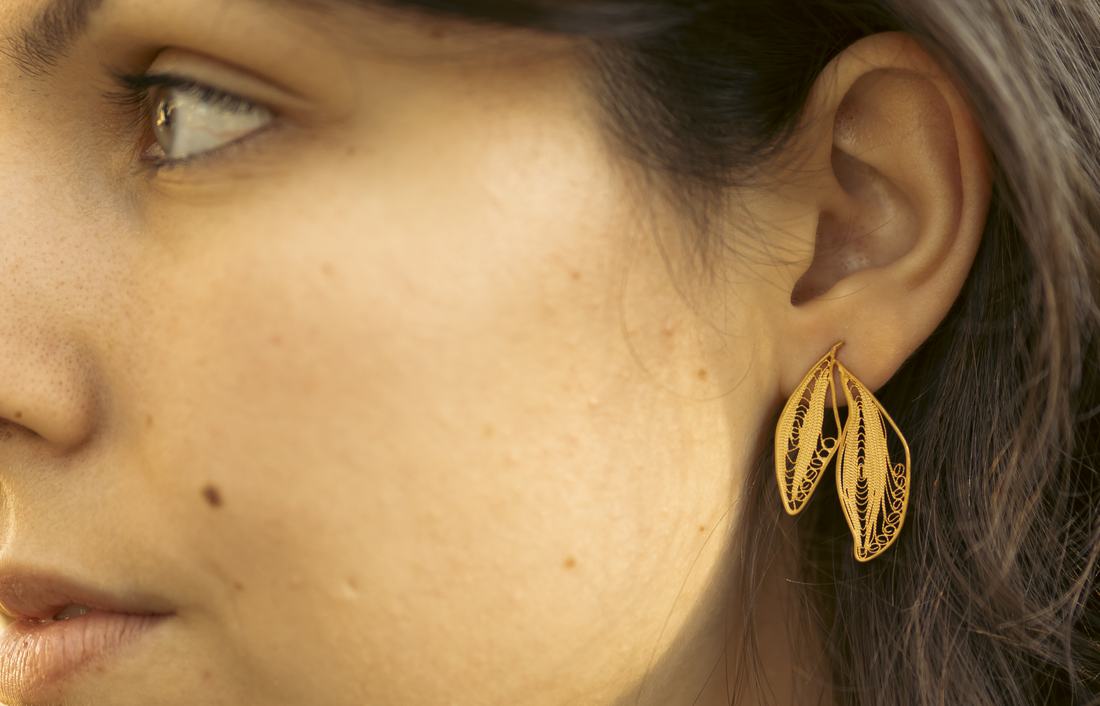
 by Lea Nogueira
Jewellery workshop in Lisbon: how it works, step by step
From booking to your finished piece: what to expect from a session at the atelier, what to bring and the most common questions from first-timers.
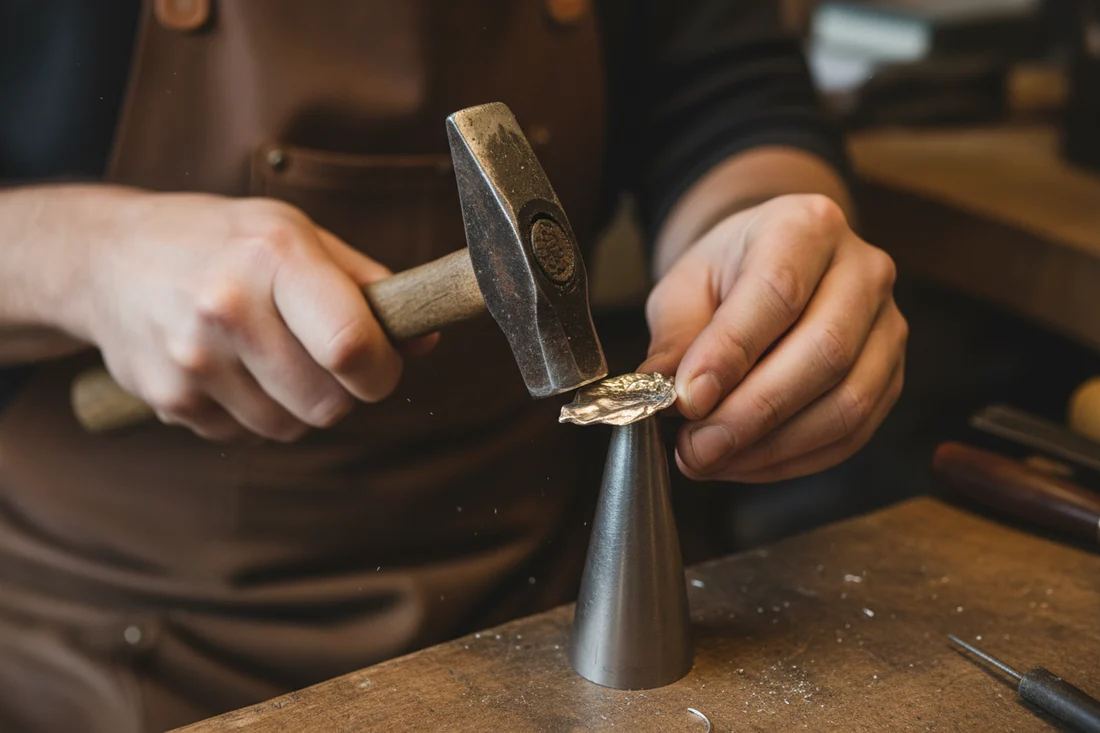
Never held a torch or a goldsmith's hammer? Perfect — neither have most people who come to the Ignis atelier. Our workshops are designed for anyone who wants to try jewellery making for the first time, unhurried and with close guidance.
This guide answers the questions we get most often and walks you through a session, from the first email to the finished piece.
1. Choose your technique
The first decision is the technique. For a first experience we recommend one of these two 3-hour formats:
- Portuguese Filigree Workshop — for those drawn to detail. You work with fine wire, tweezers and patience, and build a delicate, open piece.
- Metal Forging Workshop — for those who prefer a more physical, sculptural gesture. You work with hammer, anvil and torch, and feel the metal change shape.
If you already know how to saw and solder, try Repoussé, over two private sessions. And if you want to learn properly, there's the Goldsmithing Foundation Course with 8 private lessons. Still undecided? Read the differences between forging, repoussé and filigree.
2. Book your date
Choose the day and preferred time — morning, afternoon or late afternoon — in the form on the workshop page. Requesting is free: we confirm availability by email within 24 hours, with the address, time and everything you need to know.
Workshops run all year round by appointment. There are no fixed-date classes: the session is organised around you, alone or in a group of up to 5.
3. What to bring (and what not to)
- Comfortable clothes you don't mind getting a little dirty.
- Closed shoes — there are tools and hot metal at the bench.
- Long hair tied back, as we work with a torch.
- If you like, an idea, a sketch or a photo to inspire your piece.
No need to bring tools or materials: bench, tools and metal are provided.
4. At the bench
Groups are small so everyone has Lea nearby when needed. The session has three parts:
- Demonstration — you watch the technique and understand what comes next.
- Guided practice — you move on to your piece. Lea follows every step, corrects your gesture and helps with the delicate moments, such as soldering.
- Finishing — you clean, adjust and polish your piece.
The pace adapts to each person. Nobody has to "keep up" with the group.
5. Leave with your jewel
At the end you take home the piece you made. It won't be perfect like a collection piece — and that's exactly what makes it special. Many participants say they leave with a new way of looking at the jewellery they wear every day.
Frequently asked questions
Is it dangerous?
Not if you follow the guidance. The torch and tools are always used with supervision, and we explain the safety rules at the start.
Can I bring a child?
Ask us first. Depending on age and workshop, we can adapt the session.
What if I'm not good with my hands?
It's the most common question, and the answer is always the same: you don't need to be. Jewellery is learned by doing, and the session is designed for complete beginners.
Can I give a workshop as a gift?
Yes. We prepare gift vouchers — read how to give a jewellery workshop as a gift or write to us through the contact page.
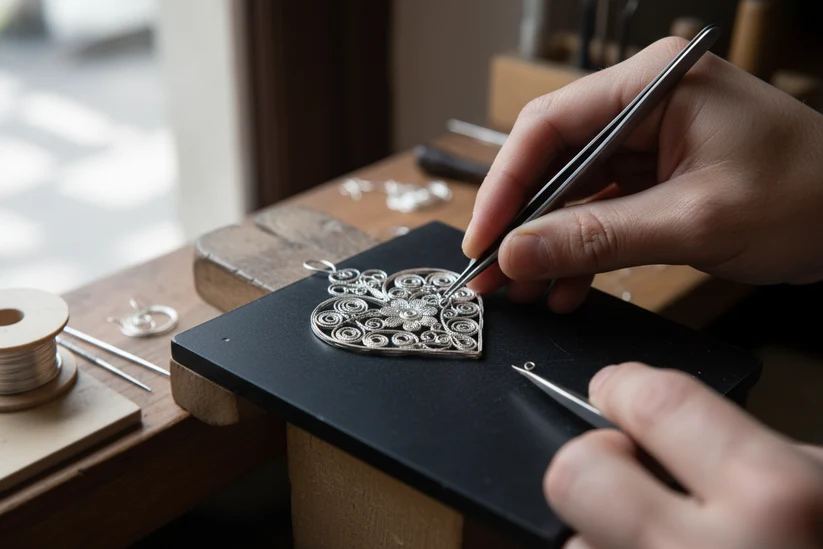
Portuguese Filigree Workshop
3 hours, no experience needed. €150 per person.
See workshop and book