 by Lea Nogueira
The Viana heart: history, meaning and how it's made
Portugal's most recognisable jewel: where it comes from, what it represents and the filigree work behind every heart.
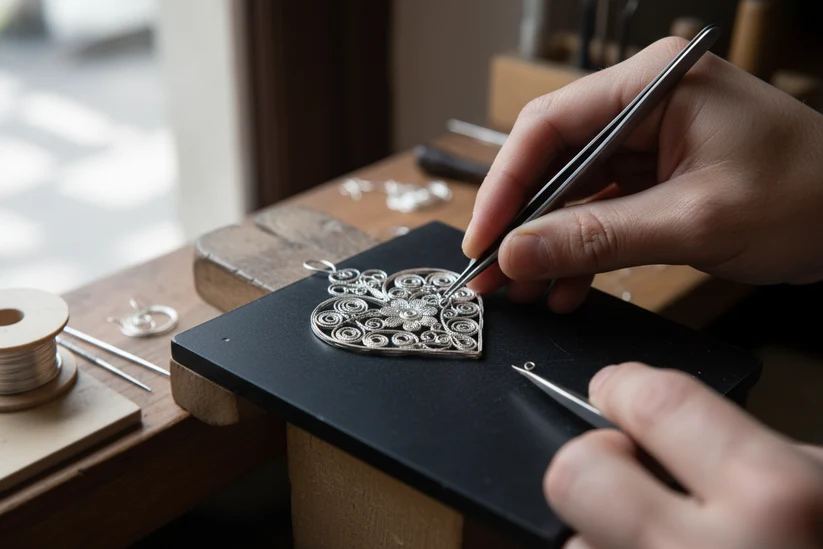
If one jewel represents Portugal, it's the Viana heart. It appears in jewellers' windows from north to south, in souvenir shops, on magazine covers and on the chests of women parading at Minho festivals. Behind such a recognisable symbol is a story of devotion, costume and a very demanding craft.
Where it comes from
The Viana heart is linked to Viana do Castelo and the Minho, the region in north-western Portugal where filigree became a family tradition. Tradition associates its shape with devotion to the Sacred Heart of Jesus, strongly promoted in Portugal in the late 18th century under Queen Maria I.
Hence its characteristic form: a heart, often crowned by a flame or a bow, its interior filled with filigree. Over time the religious meaning blended with an affectionate one, and the heart also became a symbol of love and commitment.
Gold on the chest
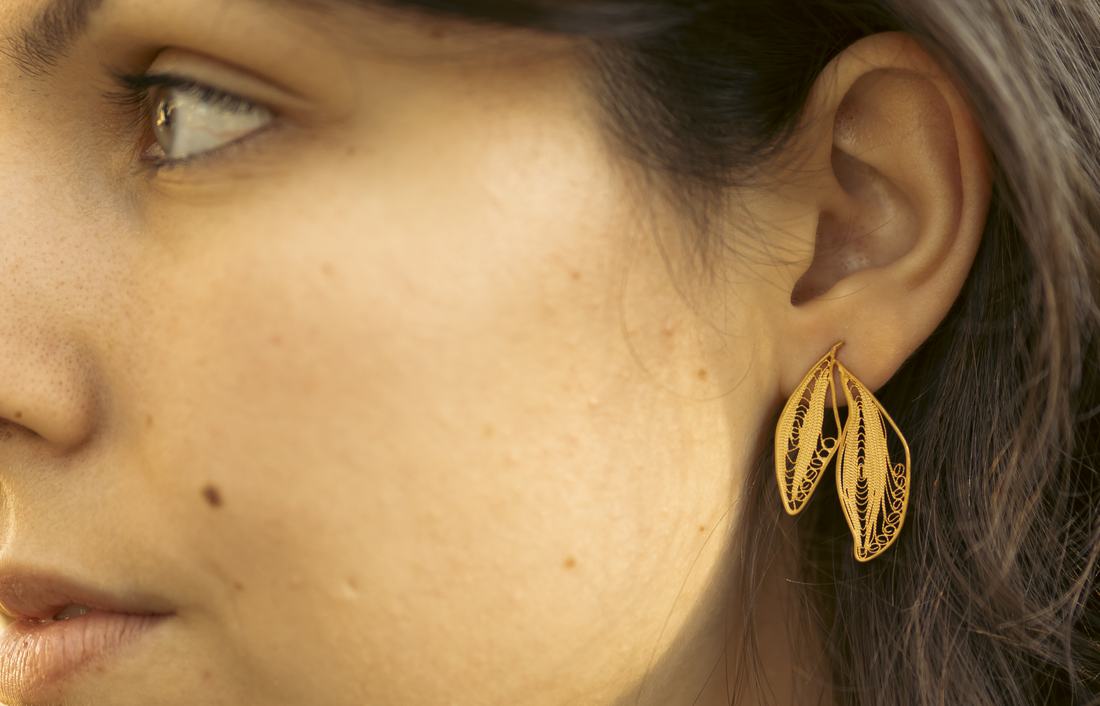
In the Minho, gold meant more than adornment. Families invested in gold pieces — hearts, arrecadas earrings, chains, beads — worn at festivals and kept as a store of value, handed down from mother to daughter. The gold a woman wore said a lot about her household.
Even today, at the Festival of Our Lady of Agonia in Viana do Castelo, women parade in traditional costume with their chests covered in gold, one of the festival's best-known moments. The heart is always there.
What it means today
Viana hearts are given at engagements, weddings, births and milestone birthdays. Many families keep hearts that have passed through several generations. For Portuguese people living abroad, it's also a way to carry a piece of home.
It has also become a graphic symbol, appearing on tiles, ceramics, textiles and illustration. But the original — the filigree jewel — is still made by hand, as it has been for centuries.
How a Viana heart is made
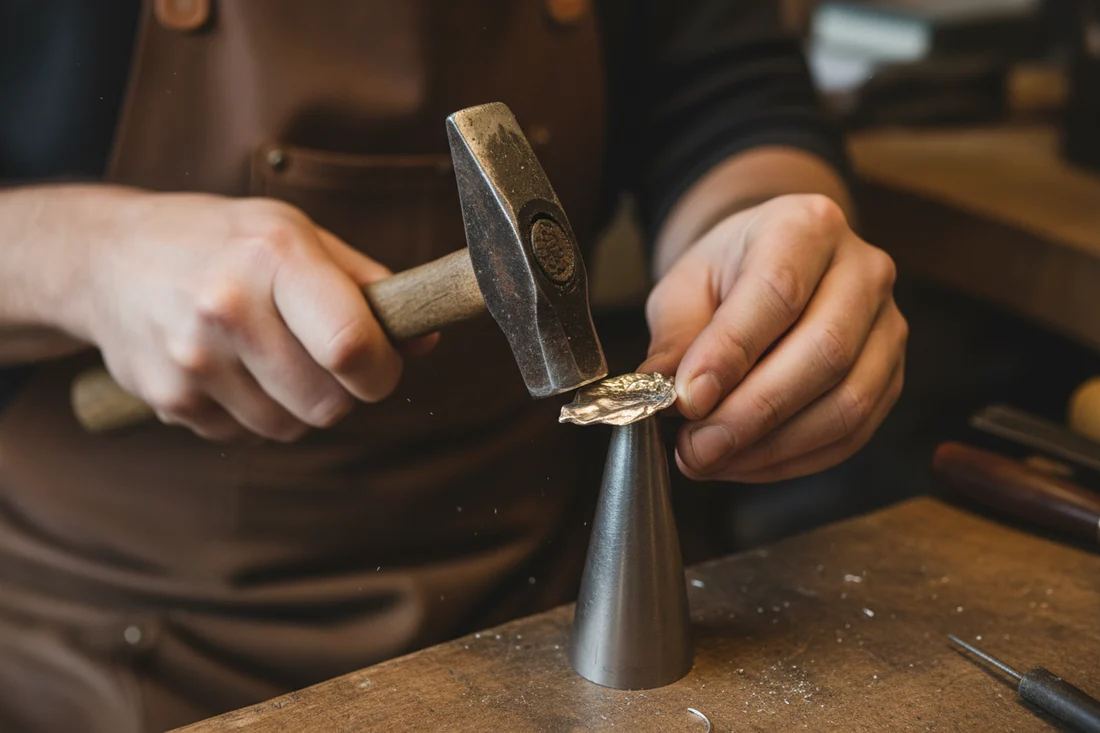
A filigree Viana heart follows the classic stages of the technique, explained in our guide to Portuguese filigree:
- The outline — a thicker wire draws the heart and its inner divisions, including the crown on top.
- The infill — fine twisted, flattened wire is coiled into spirals and fitted into each space.
- Soldering — everything is joined with solder and torch, carefully, so the fine wires don't melt.
- Volume — many hearts are made in two domed halves joined together, which gives them relief.
- Details — tiny metal grains (granulation), jump rings and the final finish.
A large gold heart can take days of work. That's why handmade pieces are valued so differently from stamped or mass-cast versions.
How to recognise a handmade heart
- The infill motifs differ slightly; in stamped pieces everything is identical.
- The wire shows its twist and sparkles irregularly.
- The piece is open — light passes between the wires.
- In gold or silver, it should carry Portuguese assay marks. We explain how to read them in Portuguese hallmarks.
Caring for an old heart
Old hearts suffer from wear: they lose infill, get dented, lose jump rings. Don't try to straighten them at home. Our filigree restoration service rebuilds missing wires with the same technique they were made with.
Make your own heart
In the filigree workshop you learn, in 3 hours, the principles behind every Viana heart: building the wire, composing the design and soldering. And you take home a piece you made.
Portuguese Filigree Workshop
3 hours, no experience needed. €150 per person.
See workshop and book