 by Lea Nogueira
Forging, repoussé and filigree: three traditional goldsmithing techniques
Hammer, relief and wire: what sets apart the three techniques we use at the atelier, the pieces each one creates, and which to choose first.
At the Ignis atelier we mainly work with three traditional techniques. All of them transform metal by hand, without moulds or industrial machines, but each speaks a different language. Knowing them helps you read the pieces you see in a display case — and choose where to start, if you want to learn.
Forging: shaping with the hammer
How it works
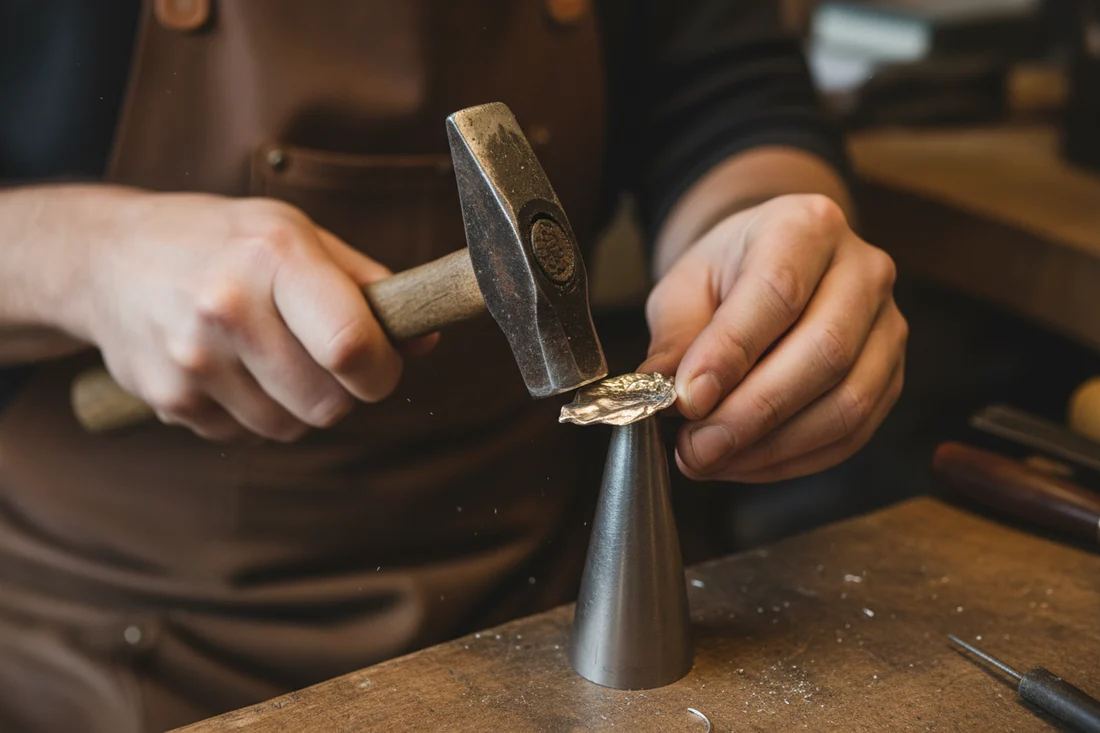
In forging, metal is shaped by hammer blows on an anvil, a mandrel or a stake. Each blow pushes the metal in one direction: it stretches, thins, curves or thickens it. It's a deformation technique — nothing is removed or added; the shape changes.
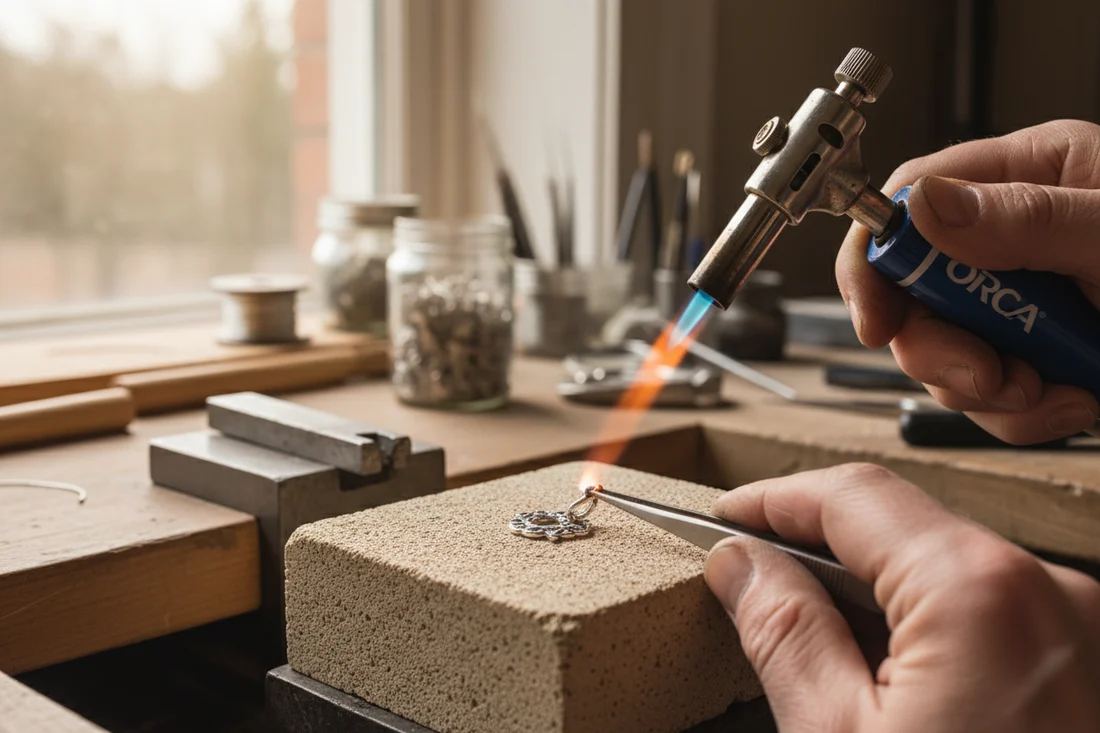
As it is hammered, metal hardens and becomes brittle. This is called work-hardening. To keep working it must be annealed: heated with a torch to a certain temperature so its internal structure reorganises and it becomes malleable again. The rhythm of forging is this cycle: hammer, anneal, hammer again.
Tools
Hammers with different faces (flat, round, cross-peen), anvil, mandrels, stakes and a torch for annealing.
The result
Pieces with an organic, sculptural character where you can feel the gesture. Surfaces that keep the hammer marks, or are polished smooth. Rings, rigid bracelets, necklaces and earrings with fluid lines — like our Foliage Bracelet.
For beginners: yes. The Forging Workshop requires no experience and shows clearly how metal responds to the hand.
Repoussé: relief from the back
How it works
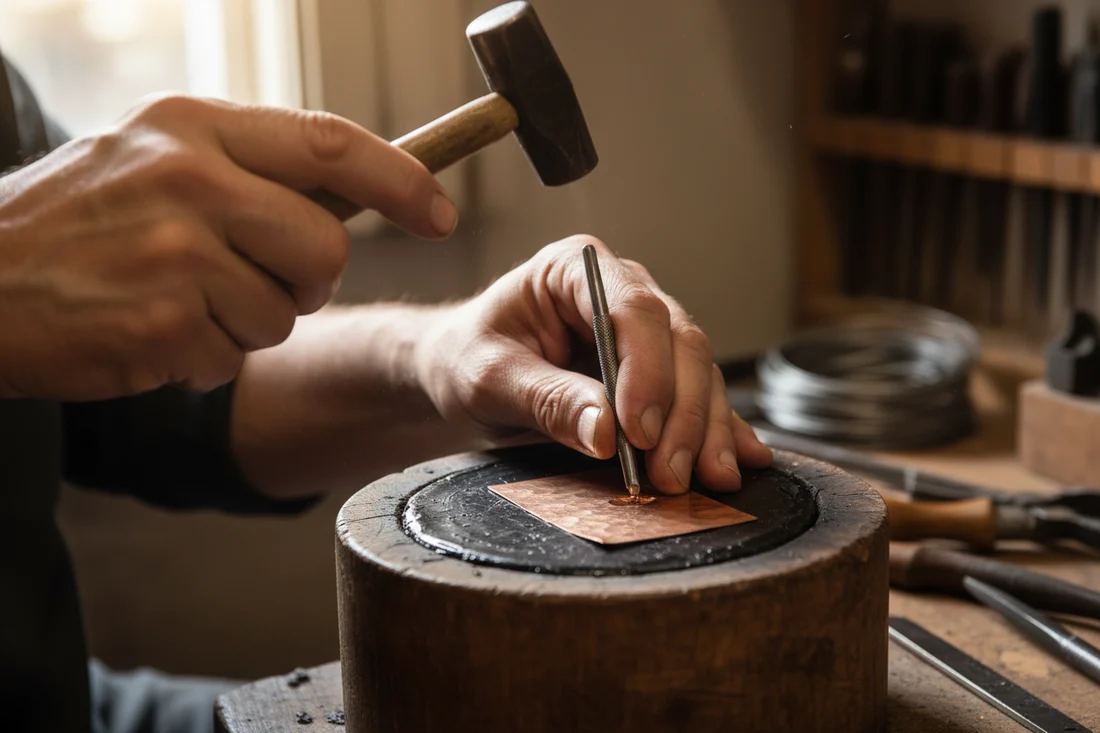
In repoussé, a metal sheet is fixed to a support that holds and cushions it — traditionally chaser's pitch — and is worked from the back with punches and a hammer. Pushing the metal from behind creates volume on the visible face.
Repoussé is usually combined with chasing, which works from the front to define outlines, textures and detail. The piece alternates between faces: it's released from the pitch, turned, fixed again, and the relief grows.
Tools
Punches with different tips (tracing, modelling, texturing), a chasing hammer, pitch and a torch, again for annealing.
The result
Pieces with volume, depth and play of light and shadow: pendants, plaques, medals and sculptural elements. It's the technique closest to drawing and sculpture.
For beginners: sawing and soldering basics help. The Repoussé Workshop runs over two private 3-hour sessions.
Filigree: drawing with wire
How it works
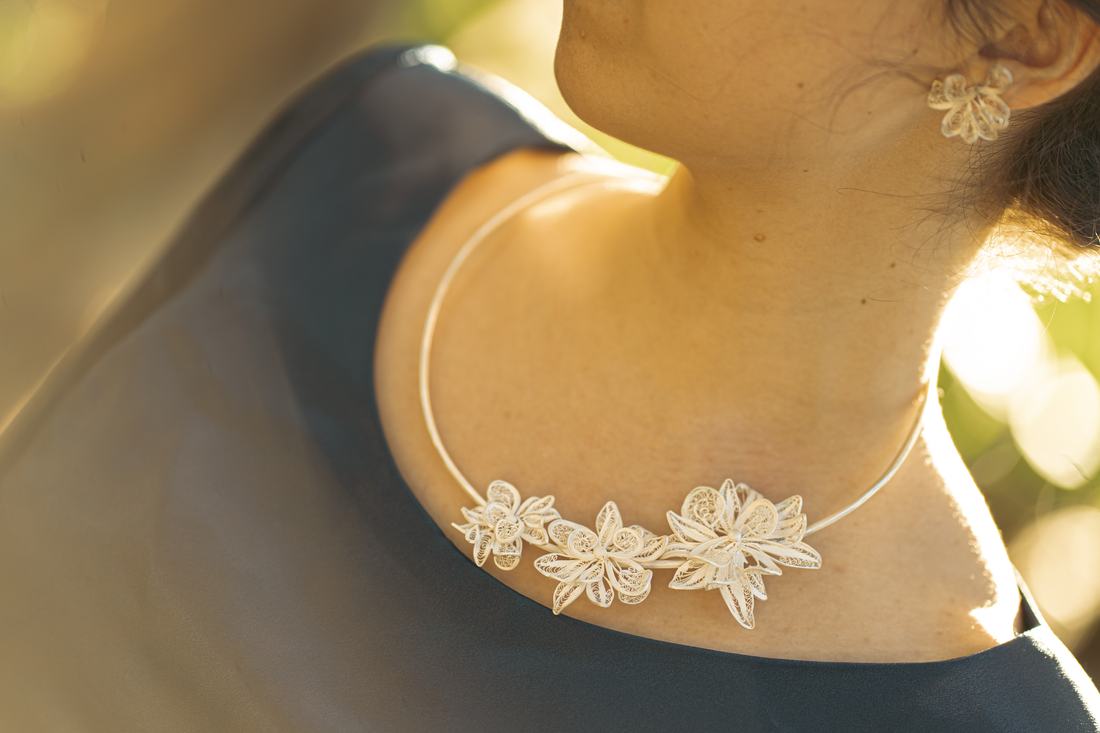
In filigree, extremely fine silver or gold wires are twisted, flattened and coiled into small motifs that fill a frame of thicker wire. At the end, everything is soldered. It's a construction technique: the piece is the sum of hundreds of small elements.
Tools
Drawplate and rolling mill to prepare the wire, fine tweezers, snips, powdered solder and a fine-flame torch.
The result
Open, light, luminous pieces with a lace-like look. It is the most iconic technique in Portuguese jewellery and the one requiring most patience and precision. Read more in our guide to Portuguese filigree.
For beginners: yes. The Filigree Workshop is the atelier's most popular.
Side by side
- Gesture: forging — strength and rhythm; repoussé — control and reading volume; filigree — patience and precision.
- Starting material: forging — wire or bar; repoussé — sheet; filigree — very fine wire.
- Typical pieces: forging — rings and bracelets; repoussé — pendants and plaques; filigree — delicate earrings and pendants.
- For beginners: forging and filigree, yes; repoussé, with some basics.
What if you want to learn all three?
The three techniques complement each other. A piece can have a forged structure, a repoussé element and a filigree detail. That's exactly what the Goldsmithing Foundation Course offers: 8 private lessons with bench basics (sawing and soldering), the three techniques, drawing for jewellery and the development of an original piece from start to finish.
Goldsmithing Foundation Course
24 hours (8 sessions), adapted to your experience. €1,200 per person.
See workshop and book