 by Lea Nogueira
Goldsmithing or jewellery making? The differences between the crafts
Goldsmith, jeweller, stone setter, lapidary, chaser: who does what, where the words come from and how the crafts overlap today.
In Portugal, "ourivesaria" (goldsmithing) is the word on the windows of jewellery shops, while "joalharia" (jewellery making) is used when talking about design and author pieces. In practice, many people use them interchangeably. But each word has a history and points to a different craft.
Goldsmithing
The Portuguese word comes from "ourives", one who works gold. Historically, goldsmithing is the art of working precious metals — gold and silver — into all kinds of objects: jewellery, but also liturgical pieces (chalices, monstrances, crosses), tableware, salvers, candlesticks. Portugal even had an old distinction between gold and silver smiths.
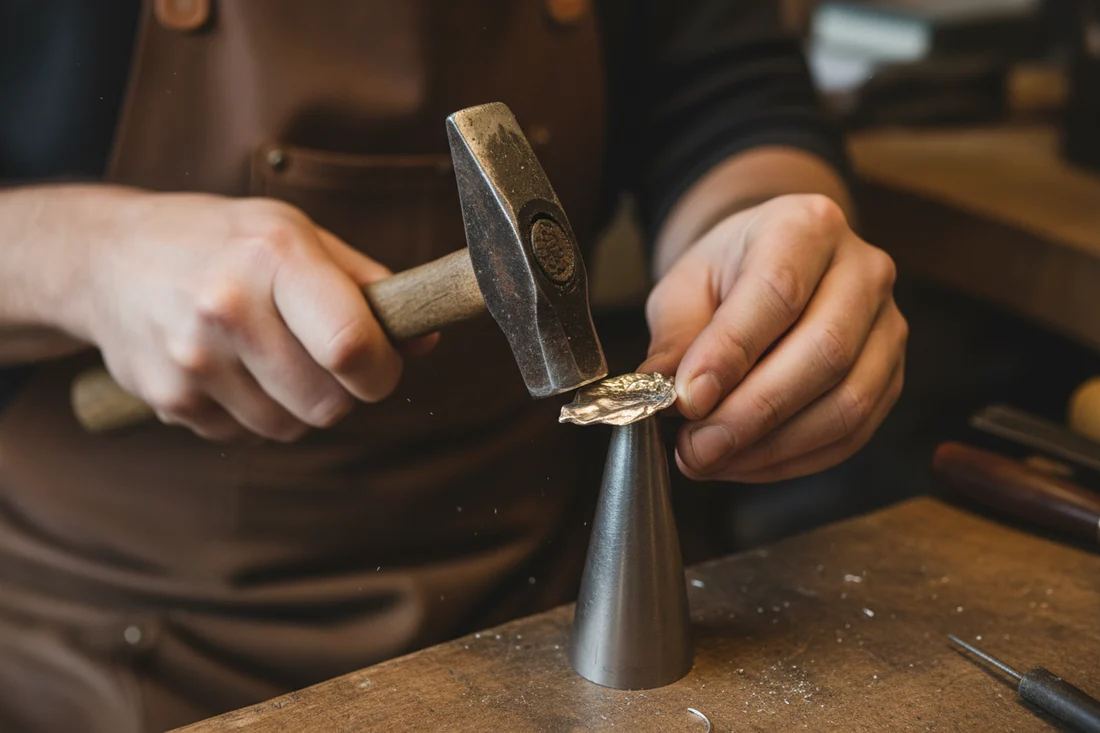
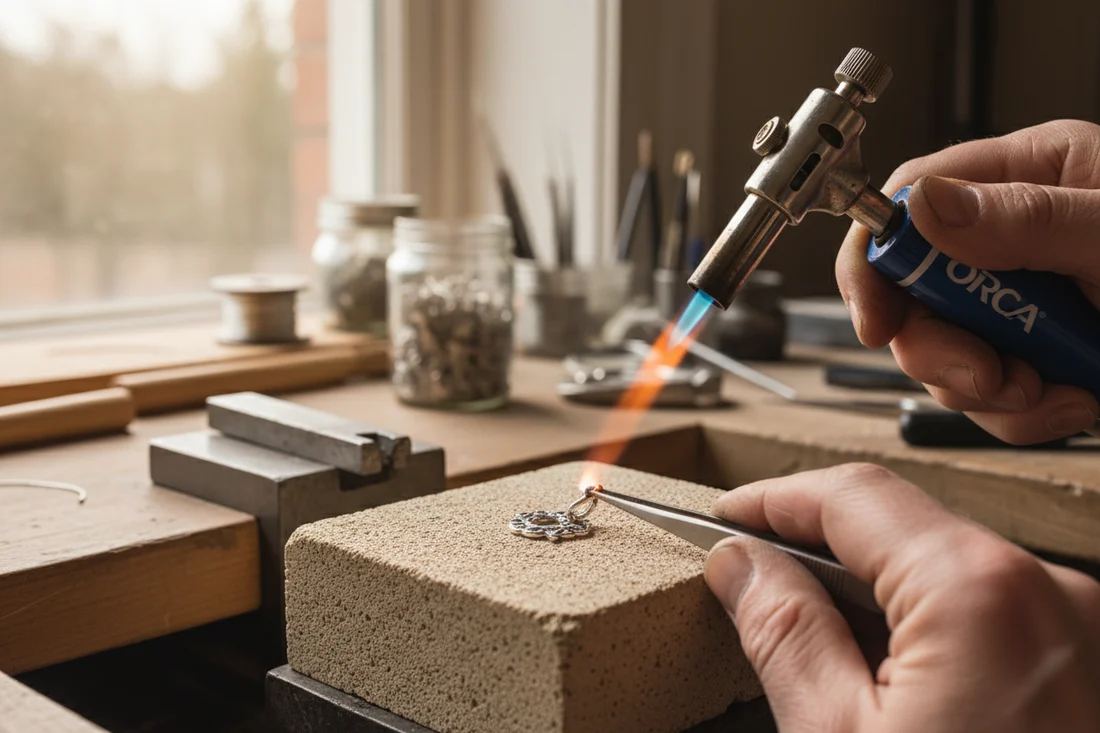
The goldsmith is above all a master of metal: melting, rolling, drawing, forging, soldering, chasing. Knowing how metal behaves is their domain.
Jewellery making
"Joalharia" comes from "joia", jewel. The focus is the object of personal adornment and, traditionally, pieces set with precious stones. The jeweller conceives the jewel as a whole — design, metal, stones, how it's worn.
Today, "author jewellery" or "contemporary jewellery" describes pieces created by a maker with their own language, where design matters as much as technique. That's what Ignis does.
The other bench crafts
- Stone setter — fixes stones in metal: prongs, grain, channel or bezel settings. A craft in its own right, of great precision.
- Lapidary — cuts and polishes stones, giving them facets that reflect light.
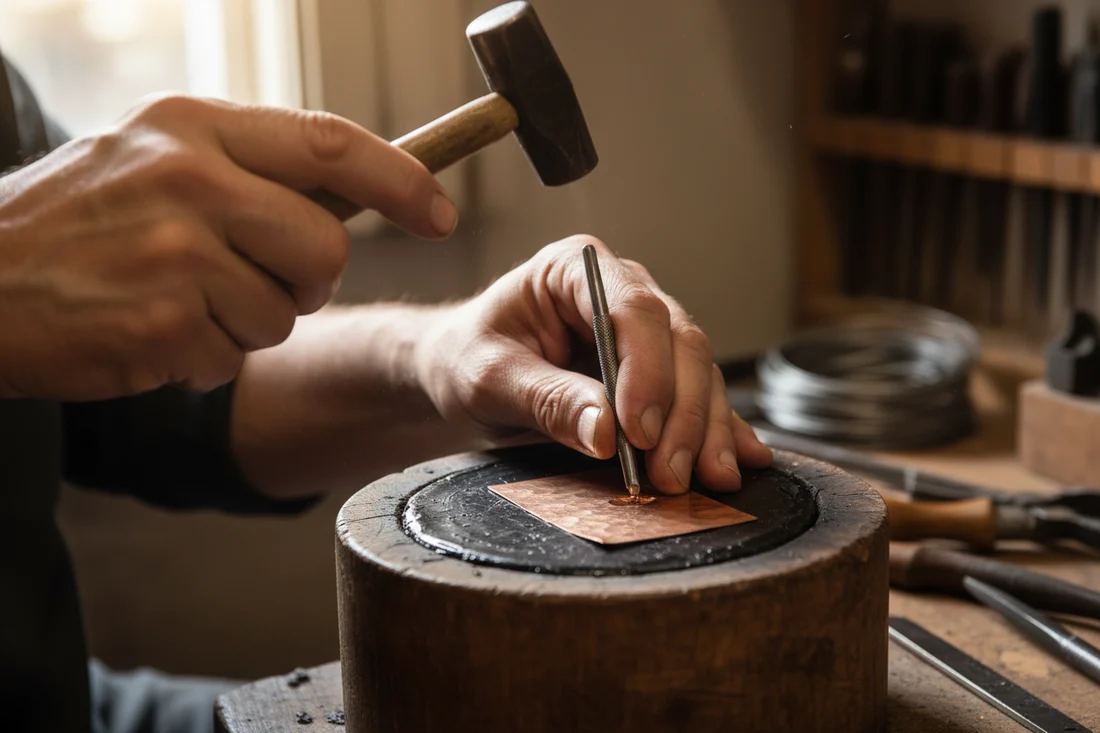
- Chaser — works relief and surface with punches; the master of repoussé and chasing.
- Engraver — hand-engraves designs, letters and coats of arms.
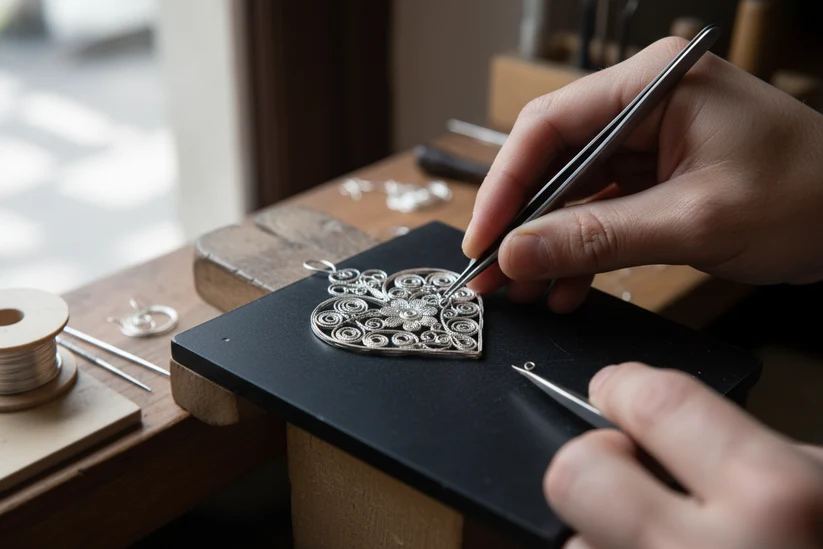
- Filigree maker — a filigree specialist, with workshops concentrated mainly in Gondomar and Póvoa de Lanhoso.
- Caster — responsible for casting.
- Polisher — does the final finish, which often decides a piece's perceived quality.
In a large workshop each craft may be a different person. In an author atelier, one person usually combines several.
And the assay office?
Alongside these crafts is the assay office, the official service that guarantees precious-metal fineness. We explain it in Portuguese hallmarks.
How it's learned today
Traditionally, it was learned in the workshop through years of apprenticeship with a master. Today there are vocational schools and degree courses in jewellery, as well as short courses and workshops that let you try before you commit.
Whatever the path, the foundations are the same: sawing, filing, soldering, forging, polishing. Everything else rests on them.
Try the craft
Our Goldsmithing Foundation Course is an 8-lesson private programme covering exactly those foundations — sawing, soldering, forging, repoussé and filigree — up to designing and making an original piece. For a shorter first experience, there are the filigree and forging workshops.
Goldsmithing Foundation Course
24 hours (8 sessions), adapted to your experience. €1,200 per person.
See workshop and book