 by Lea Nogueira
The jeweller's bench: essential tools and what they're for
From the saw frame to the rolling mill: a tour of a jewellery atelier bench and what you need to start working metal at home.
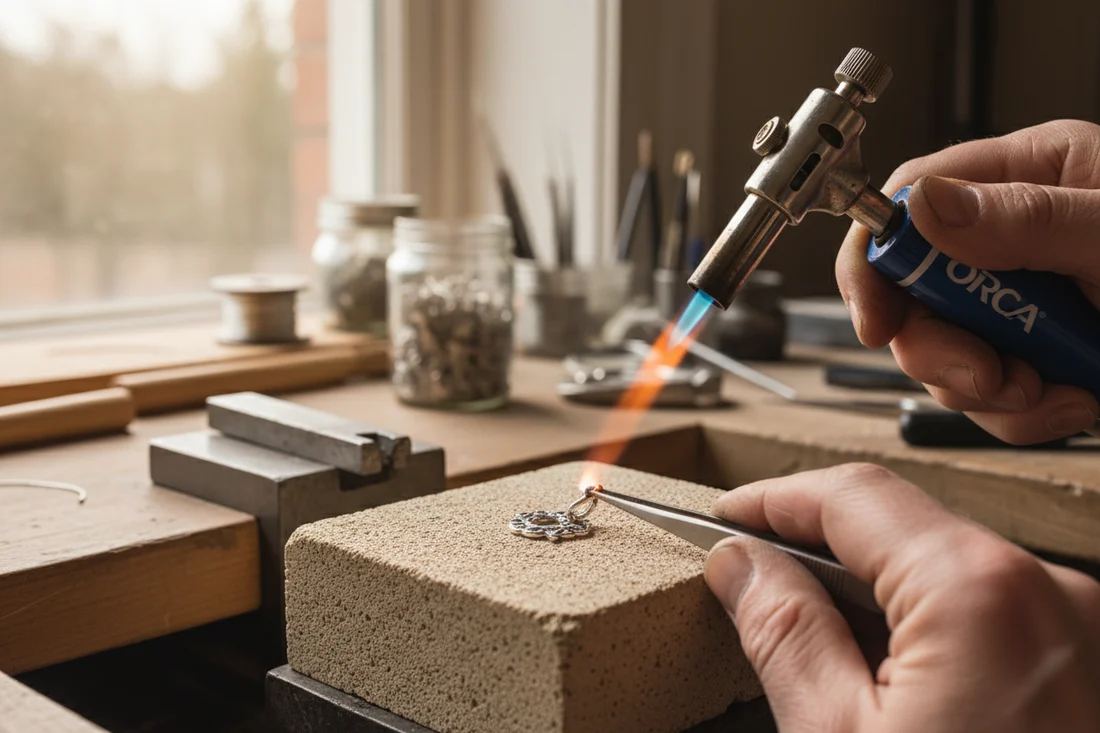
At first glance a jeweller's bench looks like organised chaos: dozens of small tools, metal filings, a torch to one side. But every object has a precise job, and most have barely changed in centuries. Here's a tour of the atelier bench — useful if you're curious or thinking of starting.
The bench
A jeweller's bench is higher than a normal table, so work sits at eye level and arms are supported. It has a half-moon cut-out at the front and, underneath, a skin or tray that catches filings — the tiny bits of gold and silver that are collected and reused.
In the middle, a protruding wooden block, the bench pin, is the support for sawing, filing and sanding. It's the most-used tool and the least noticed.
Cutting and shaping
- Saw frame — a fine arched saw with very thin blades for precise cutting of sheet and wire. Learning to saw is one of the first things you do.
- Files — in various sizes and cuts, including small needle files, for refining shapes and removing marks.
- Pliers — round-nose, flat-nose, cutters, ring-bending. Each bends or holds differently.
- Shears — for quick cuts in thin sheet.
Hammering and forming
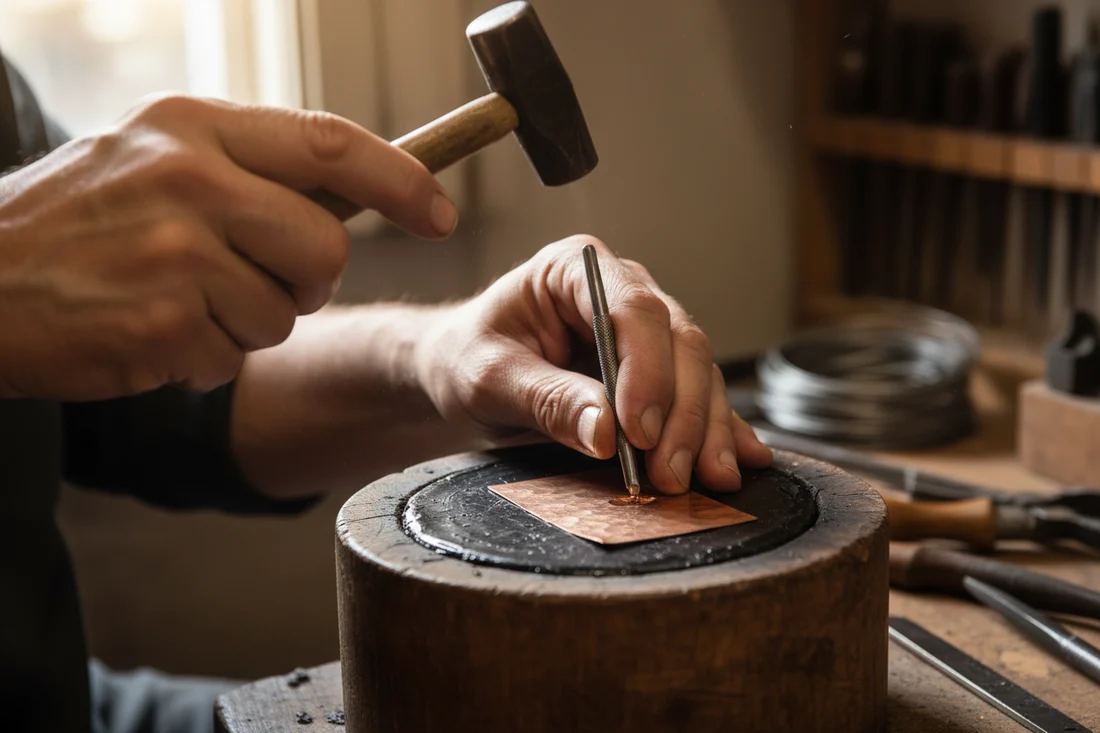
- Hammers — ball-peen, cross-peen, planishing, chasing, rawhide or nylon (which don't mark the metal).
- Anvil and stakes — steel surfaces to hammer metal on.
- Ring mandrel — a graduated steel cone to shape and size rings.
- Dapping block — a block with hemispherical cavities and punches, for making domes.
- Punches — for repoussé and chasing.
Preparing metal
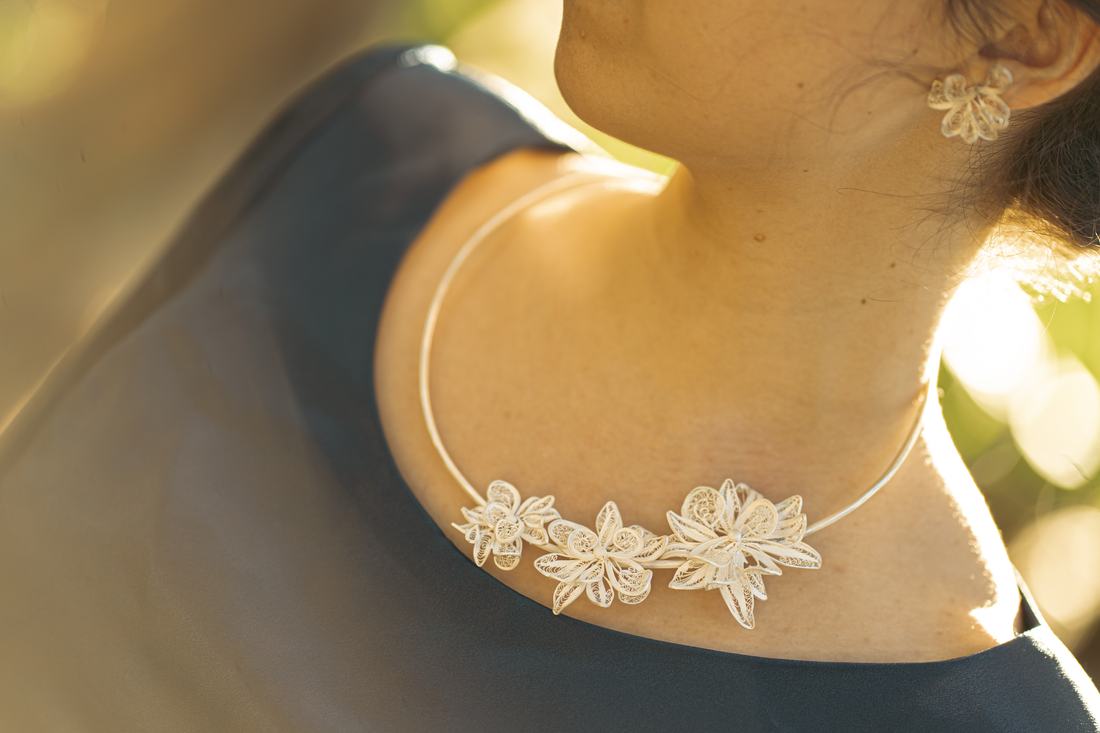
- Rolling mill — two steel rollers that thin sheet and wire. Essential for filigree.
- Drawplate — a steel plate with decreasing holes to pull wire through and thin it.
- Ingot mould — to pour molten metal into bars.
Soldering
- Torch — gas-fired, with flames of different sizes. For soldering, annealing and melting small amounts.
- Soldering block — a heat-resistant charcoal or ceramic surface for the piece.
- Solder and flux — solder is an alloy of the same metal with a lower melting point; flux protects the metal and helps solder flow.
- Soldering tweezers and third hand to hold hot pieces.
- Pickle — a solution that removes oxidation after soldering.
Measuring
Caliper, ruler, dividers and square. In jewellery you work to a tenth of a millimetre.
Finishing
Progressive-grit sandpaper, a flex-shaft motor with brushes and rubber wheels, a polishing motor with wheels and compounds, and burnishers to shine by hand.
Where to start at home
To start working metal at home you don't need everything. A reasonable starter kit: bench pin, saw frame and blades, a few needle files, two or three pliers, a hammer, a steel block, a small torch, a soldering block, solder and flux, and sandpaper. The rest comes with time and the techniques you want to explore.
But before investing, it's worth trying at a bench that's already set up.
Learn at a real bench
In the Goldsmithing Foundation Course you learn to use each of these tools over 8 private lessons, up to making a piece of your own. Or start with a 3-hour forging or filigree workshop. Read also how to start making jewellery.
Goldsmithing Foundation Course
24 hours (8 sessions), adapted to your experience. €1,200 per person.
See workshop and book