 by Lea Nogueira
Portuguese filigree: what it is, where it comes from and how it's made
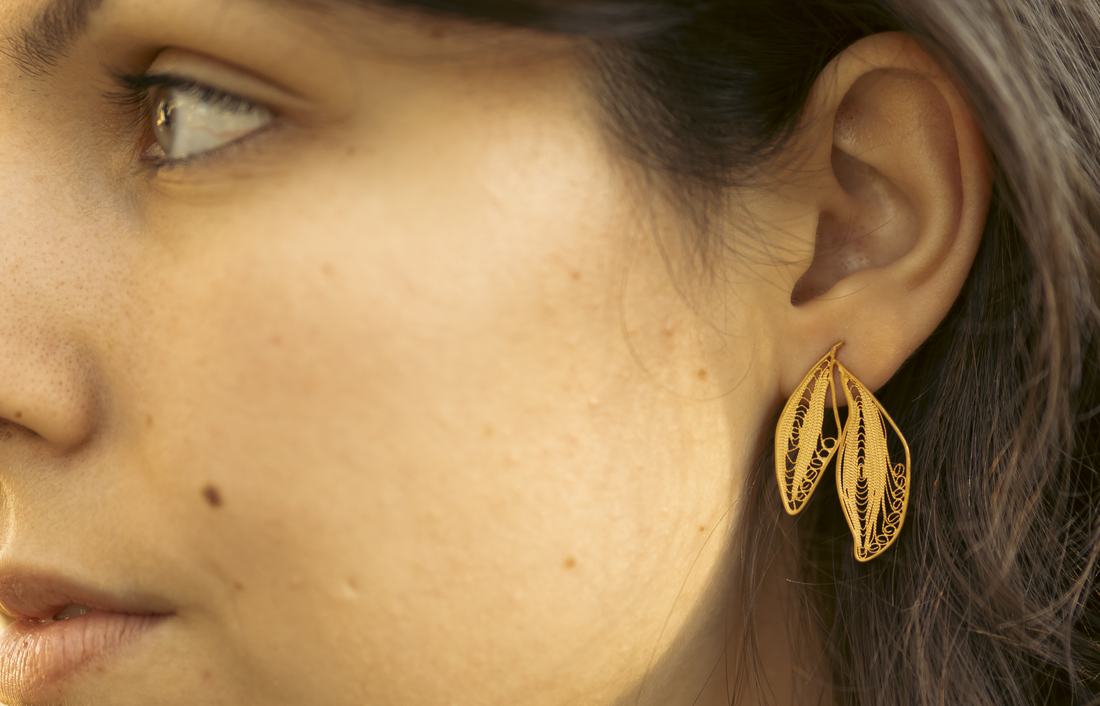
One look at a filigree piece explains why it became a symbol of Portuguese jewellery: a design that looks like lace, made entirely of metal. Behind that lightness lie hours of meticulous work and a technique that has crossed centuries.
What is filigree?
The word comes from the Latin filum (thread) and granum (grain). Filigree is the art of building jewellery from very fine gold or silver wires that are twisted, flattened and shaped into small motifs filling a frame — and then soldered together.
The result is an open, luminous and surprisingly light piece, where the design grows out of the patient repetition of a single gesture.
A tradition rooted in northern Portugal
Wirework jewellery has very old roots in the Iberian Peninsula, but it was in northern Portugal — especially around Gondomar and Póvoa de Lanhoso — that filigree took on the identity we recognise today. For generations, family workshops passed the craft from master to apprentice.
Some pieces became true icons: the Viana heart (coração de Viana), the arrecadas earrings and filigree beads, all part of the traditional Minho costume and still given at important moments in life.
How a filigree piece is made
Every jewel goes through several stages, almost all by hand:
- The wire: the metal is drawn until very thin; two wires are twisted together and then flattened, which gives filigree its characteristic sparkle.
- The frame: a thicker wire draws the outline of the piece — its "skeleton".
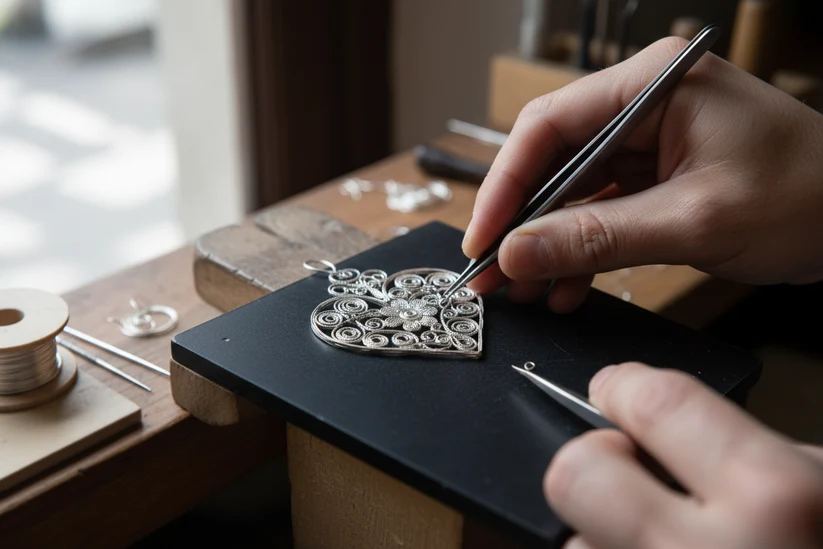
- The infill: with tweezers, the twisted wire is coiled into tiny spirals and motifs that fill the frame.
- Soldering: everything is joined with solder and a torch, a step that demands precision so the finest wires don't melt.
- Finishing: cleaning, polishing and, where relevant, gold plating.
Contemporary filigree
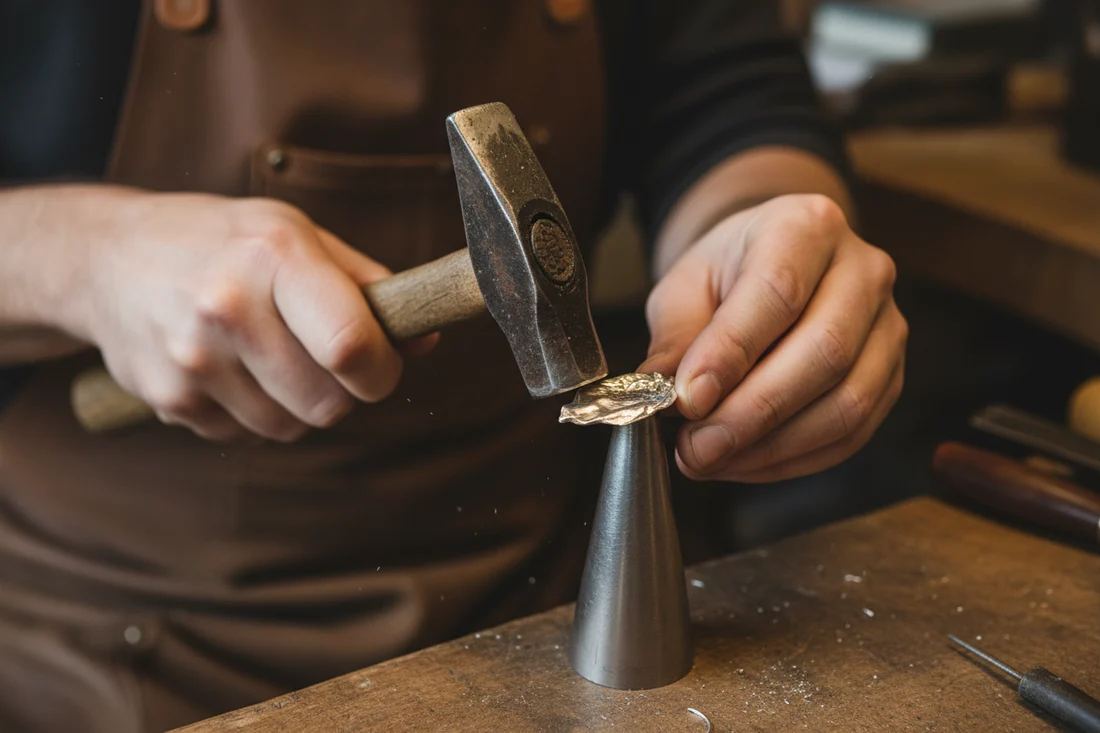
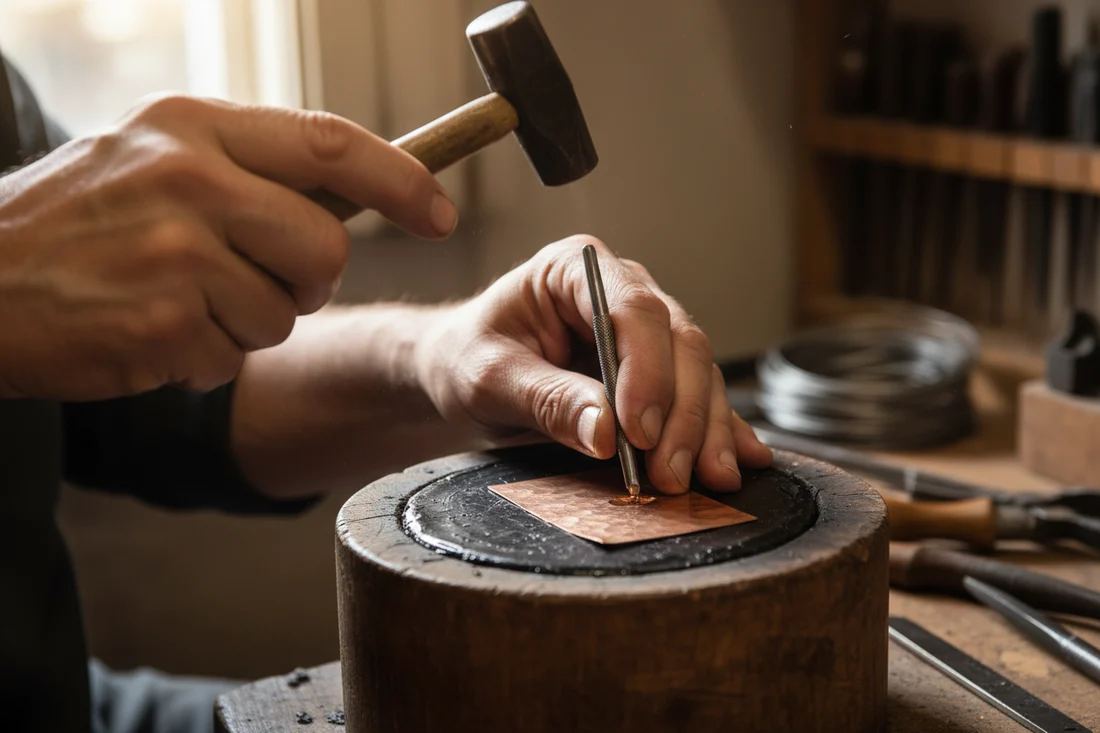
Filigree is not a museum technique. At the Ignis atelier, Lea Nogueira uses it in author pieces with a contemporary design, alongside other traditional techniques such as forging and repoussé — showing that an ancient gesture can tell new stories.
Try it with your own hands
The best way to understand filigree is to make it. In our filigree workshop in Lisbon you build a small piece from start to finish in 3 hours, with no experience needed — and take it home.
Portuguese Filigree Workshop
3 hours · No experience needed · €150 per person
View Workshop